
2025 Annual Report
UF Research Impact
For 75 years, America’s great research universities have worked in partnership with the federal government to address the biggest challenges facing our people, like diseases, natural disasters and national defense. Not only has this partnership produced groundbreaking discoveries that have improved countless lives, but it has trained generations of students to carry the work forward, constantly renewing our opportunities for innovation and economic growth.
The University of Florida has been a participant in this partnership from the beginning, and last year our faculty were awarded $817 million in funding to conduct this impactful research from the National Institutes of Health, the National Science Foundation, the U.S. Department of Agriculture, NASA, the Department of Defense, the Department of Education, the Department of Energy and many other federal agencies.

David Norton, Ph.D.
UF’s partnership with the federal agencies helps our faculty solve some of society’s most pressing problems, in health care, agriculture, national security, space and many other areas.
Vice President for Research
2025 By the Numbers
$1.245 Billion
Total Awards
$1.33 Billion
Total Expenditures

- Federal…$817.5 Million
- HHS…$459.1 Million
- USDA…$102.0 Million
- NSF…$68.8 Million
- DOD…$52.5 Million
- Energy…$27.8 Million
- Education…$23.2 Million
- VA…$20.0 Million
- NASA…$19.5 Million
- Commerce…$16.2 Million
- DOT…$8.1 Million
- USAID…$6.4 Million
- Interior…$4.1 Million
- EPA…$2.6 Million
- Justice…$1.9 Million
- OTHER…$5.2 Million
- *amounts rounded
- Foundations…$140.2 Million
- State/Local…$118.1 Million
- Other…$102.5 Million
- Industry…$66.9 Million

- College of Medicine (Including Jacksonville)…$362.3 Million
- Other…$353.3 Million
- PHHP $36.1 Million
- Pharmacy…$31.6 Million
- Veterinary Medicine…$24.4 Million
- Dentistry…$15.6 Million
- Other…$245.6 Million
- *amounts rounded
- UF | IFAS…$216.7 Million
- College of Engineering…$139.3 Million
- College of Education…$77.2 Million
- Scripps…$53.3 Million
- College of Liberal Arts and Sciences…$43.2 Million

- Federal…$612.4 Million
- Other…$384.5 Million
- Institutional…$276.1 Million
- Unrecovered…$61.6 Million
- Costshare…$10.9 Million
- Other…$35.9 Million
- State/Local…$231.9 Million
- Foundations…$60.3 Million
- Industry…$41.5 Million

- College of Medicine…$373.6 Million
- Other…$304.0 Million
- Type One Centers…$66.0 Million
- Pharmacy…$39.6 Million
- PHHP…$36.3 Million
- Veterinary Medicine…$33.6 Million
- PHHP–COM Integrated…$27.7 Million
- UF Research…$25.2 Million
- Dentistry…$21.0 Million
- Health Affairs…$17.0 Million
- HHP…$14.8 Million
- DCP…$10.3 Million
- Florida Museum…$$9.8 Million
- Nursing…$6.3 Million
- Grad School…$3.2 Million
- Arts…$1.4 Million
- Business…$1.0 Million
- Journalism…$0.8 Million
- Law…$0.1 Million
- Other Administrative Units…$19.7 Million
- Unable to split between units at time of estimate…$5.4 Million
- *amounts rounded
National Institutes of Health
UF cancer researchers funded by the National Institutes of Health have found that patients with advanced lung or skin cancer who received a COVID-19 mRNA vaccine within 100 days of starting immunotherapy drugs lived significantly longer than those who did not get the vaccine.
The findings, published in the journal Nature by researchers at UF and the MD Anderson Cancer Center in Texas, is a defining moment in a decade-plus of research testing mRNA-based therapeutics designed to “wake up” the immune system against cancer. It also marks a significant step toward a long-awaited universal cancer vaccine to boost the tumor-fighting effects of immunotherapy.
“The implications are extraordinary — this could revolutionize the entire field of oncologic care,” said UF pediatric oncologist Elias Sayour, the senior co-author on the paper. “We could design an even better nonspecific vaccine to mobilize and reset the immune response, in a way that could essentially be a universal, off-the-shelf cancer vaccine for all cancer patients.”
Analyzing more than 1,000 records from patients with Stage 3 and 4 non-small cell lung cancer and metastatic melanoma treated at MD Anderson from 2019 to 2023, the team found that lung cancer patients who got the vaccine nearly doubled their median survival—from about 21 months to 37 months. For melanoma patients, survival increased by several months, with some still alive at the time of data collection.
“When you give an mRNA vaccine, that acts as a flare that starts moving all of these immune cells from bad areas like the tumor to good areas like the lymph nodes,” Sayour said.
“The implications are extraordinary — this could revolutionize the entire field of oncologic care.”
Elias Sayour

National Science Foundation
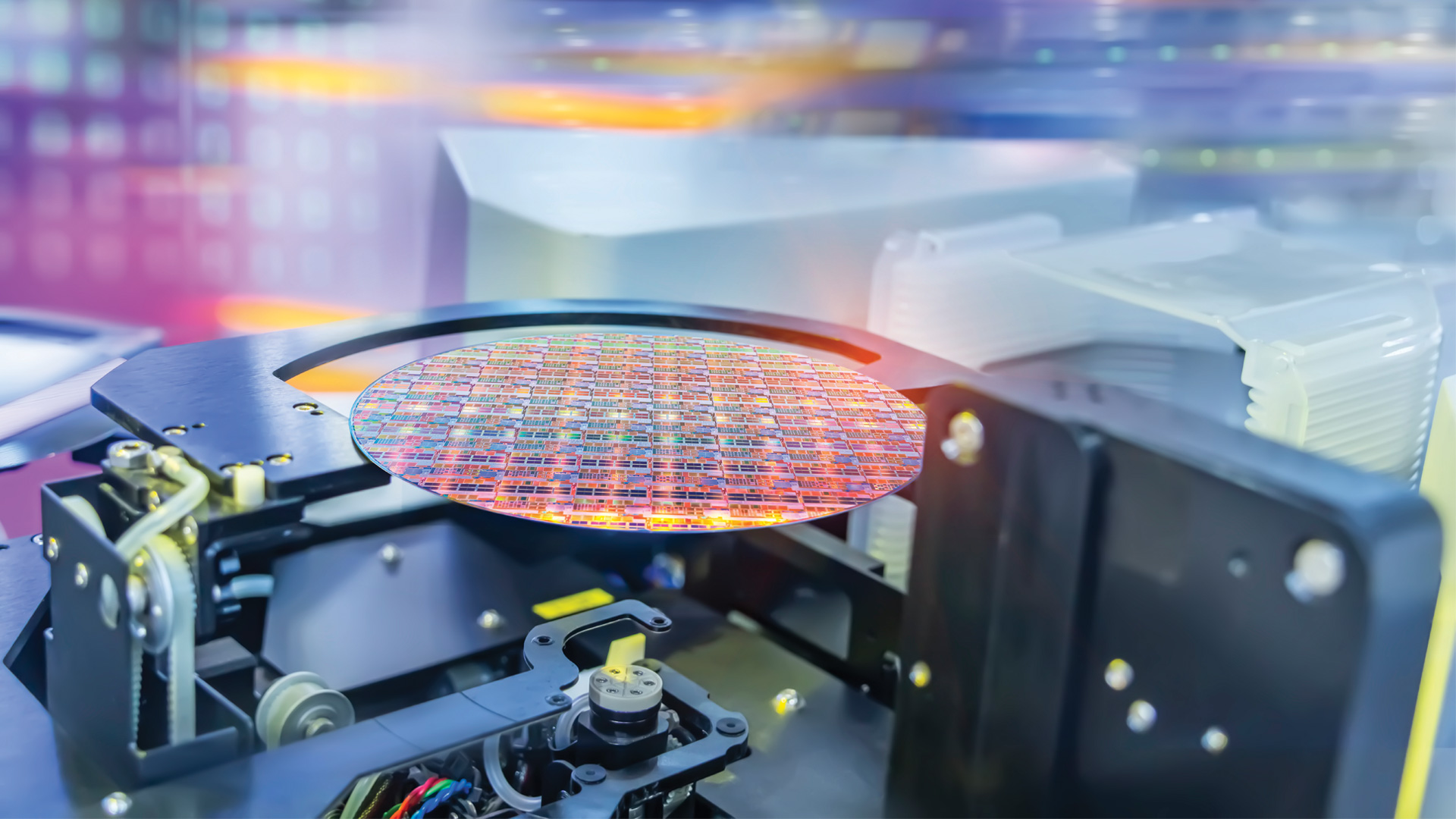
The University of Florida is mobilizing a wide array of computer and information scientists and engineers to help Florida grow as a global leader in semiconductors and specialty electronics.
From Gainesville to Jacksonville to Orlando, UF researchers are partnering with colleagues at other universities and with industry to conduct high-impact R&D programs, expand the talent pipeline and coordinate the state’s semiconductor ecosystem. The research is backed by millions of dollars in funding from the National Science Foundation and other federal agencies, the State of Florida, and private industry.
The Florida Semiconductor Institute will be a key part of UF’s planned campus in downtown Jacksonville, anchored by a $45 million Advanced Technology Center, co-locating UF research and development with industry-leading semiconductor companies.

“The creation of an FSI footprint in Jacksonville will serve as a significant catalyst for future economic growth in Florida’s R&D sector, something that is vital to ensuring prosperity for Florida’s future,” said David Norton, UF’s vice president for research.
UF is also a key partner in the Central Florida Semiconductor Innovation Engine, one of 10 inaugural NSF Regional Innovation Engines. This program focuses on building a collaborative ecosystem to grow the state’s semiconductor industry. UF’s initial contributions to the project will tackle challenges in advanced semiconductor packaging, hardware security, and microelectronics systems designed for extreme environments. These areas are essential for next-generation chips used in aerospace, defense, and high-performance computing.
U.S. Department of Agriculture
UF’s Institute of Food and Agricultural Sciences is the new home to Breeding Insight, a USDA program which supports public plant breeding efforts via more than 61 USDA- and university- based programs across the country.
Scientists at Breeding Insight use advanced prediction methods, including high-performance computing and artificial intelligence, to dramatically accelerate the development of new pest- and disease-free crops that are more robust and nutritious.
Among the nearly 50 species currently supported by Breeding Insight, 10 are among the top agricultural products for Florida: blueberry, alfalfa, strawberry, watermelon, lettuce, cucumber, sugar cane, citrus, potato and commercial beekeeping. In the future, additional Florida crops can be supported, including cabbage, peanuts, cantaloupes, avocado and nursery plants. Breeding Insight also hopes to expand to help Florida’s aquaculture industry for farm-raised tilapia, catfish, sturgeon, red drum, oysters and clams.

“The shift of the program to Florida solidifies UF as the world’s best plant breeding program and brings additional seed funding and data analytic resources to UF/IFAS plant breeders,” said Damian Adams, associate dean for research.
Several universities vied to be Breeding Insight’s new home, but Adams and Moira Sheehan, director of Breeding Insight, said UF was chosen because of the strength of its agricultural programs, stakeholder standing and world-class computing infrastructure — including HiPerGator.
National Aeronautics and Space Administration
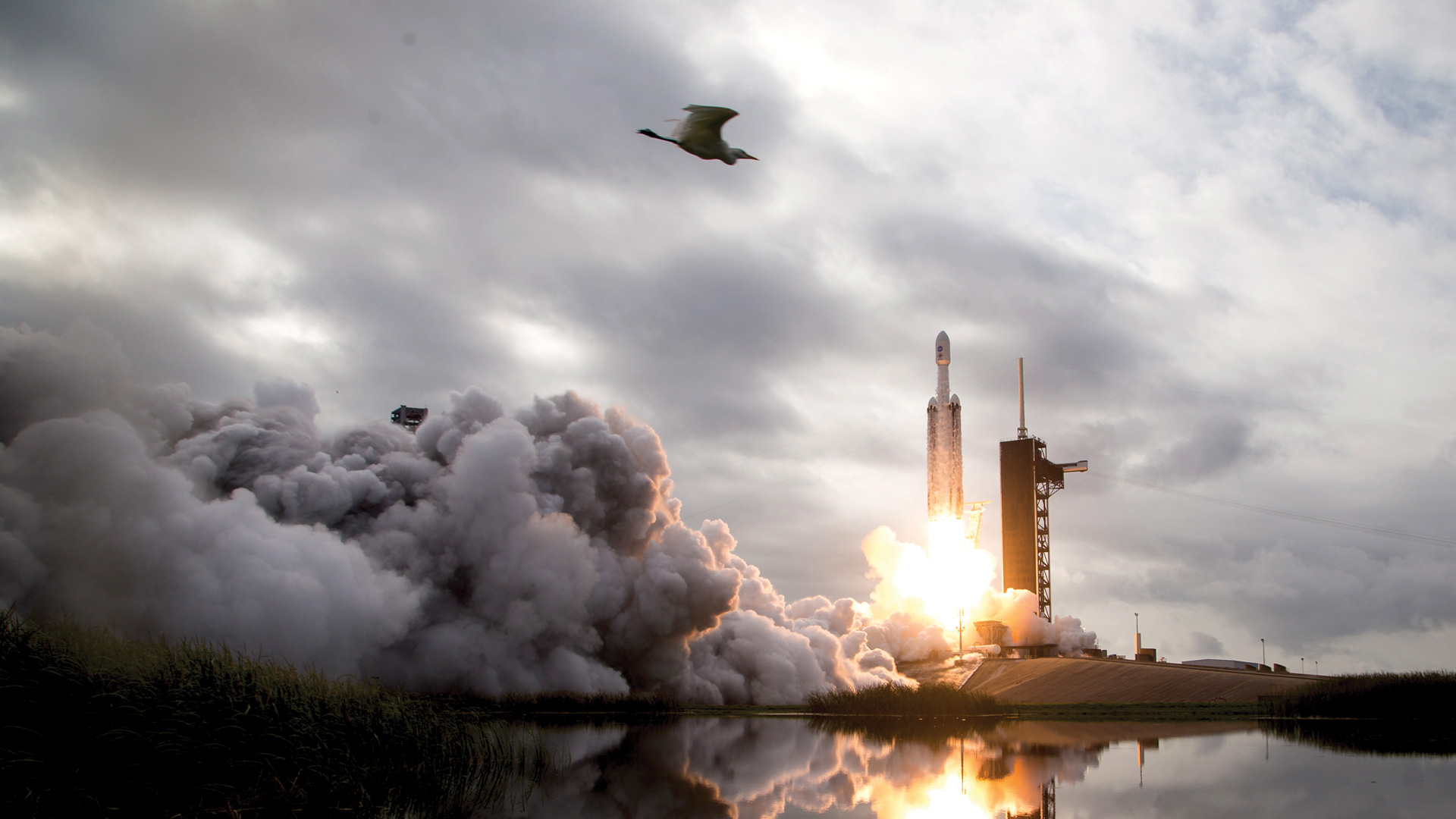
From keeping rocket fuel cold to enabling medical care millions of miles from Earth, UF researchers supported by NASA are delivering practical solutions for the next era of exploration.
In one project, a team led by Jacob Chung, a professor of mechanical and aerospace engineering, tackled a critical challenge: cryogenic fuel boil‑off.
“Propellant loss due to boiling and evaporation in storage tanks during long-term space missions is one of the most important considerations in tank design,” Chung said. “Once cryogenic liquid turns to vapor, it can no longer be used as propellant. Our research is focused on providing a technology to minimize or even eliminate that boil-off loss.”
The team tested four ultra‑light thin‑film coatings that actively suppress boiling in microgravity, potentially minimizing or eliminating fuel loss over long missions.
UF researchers are also part of a NASA mission that exposes UF‑designed semiconductor chip prototypes to radiation to inform the development of radiation‑hardened, energy‑efficient processors for autonomous spacecraft, satellite communications and advanced sensing.
“By testing our photonic AI hardware on the ISS and during the launch, we’re laying the foundation for future high-performance, radiation-hardened computing systems — critical for deep space exploration and satellite autonomy,” said Volker J. Sorger, a professor of semiconductor photonics.
A team led by engineering Professor Eric Du is targeting medical care in deep space by developing robotic hands controlled using AI and haptic feedback. The hands enable operators to “feel” a procedure through vibrations and pressure cues. The approach could let astronauts perform ultrasound and other delicate tasks independently or with guidance from Earth. The same advances promise benefits for rural telemedicine and hazardous terrestrial environments.
UF Innovate
446
Invention Disclosures
339
Licenses/Options
(including IFAS)
9
Startups